



Yokohama looks set to skip Japan's 2027 casino license bidding round. Here's why big cities walk away from casino revenue, and what it does to a market.
What would it take for Japan’s second-largest city to turn its back on a multibillion dollar casino resort, twice? That is effectively what Yokohama is doing. With seven candidates running for mayor and not one of them backing an integrated resort, the city is widely expected to sit out Japan’s 2027 casino license bidding round entirely. For operators who spent years courting it, that is a closed door. For anyone trying to understand how casino markets actually form, it is one of the most useful case studies going.
What made Yokohama walk away from the 2027 bidding round?
The short answer is arithmetic in the voting booth, not in the business plan.
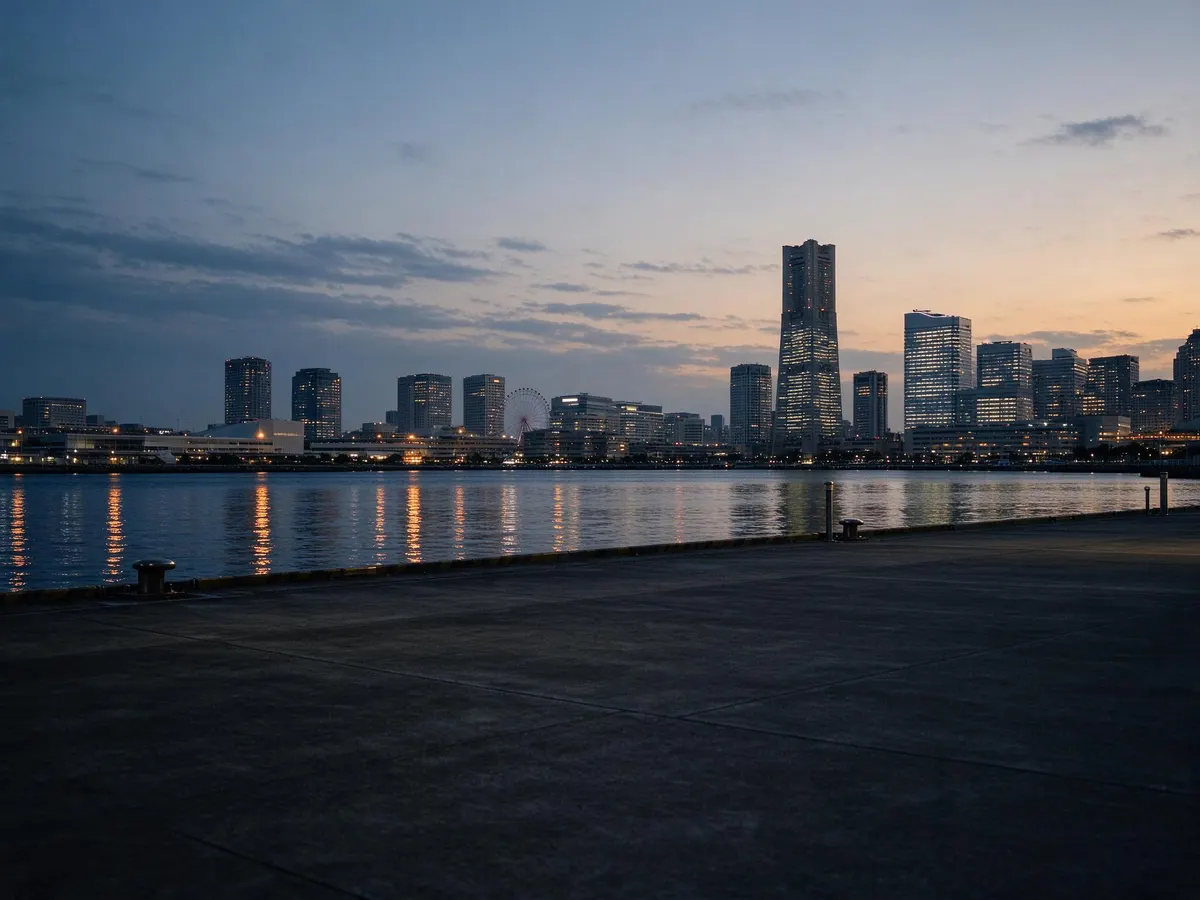
Yokohama sits roughly 20 miles south of Tokyo and is Japan’s most populous city after the capital. On paper it is the single most attractive location left in the country: enormous domestic catchment, an international airport within reach, a waterfront site at Yamashita Pier, and the kind of brand prestige that pulls in names like Las Vegas Sands, Wynn Resorts, Caesars Entertainment, Genting and Melco Resorts. Industry watchers have long treated Yokohama as the piece that would make Japan’s second bidding window worth competing for.
The politics went the other way. Yokohama’s integrated resort candidacy was already pulled once, in 2021, when Takeharu Yamanaka took office on the back of organised local opposition to the project. Yamanaka resigned in September, and the special election set for 18 October has produced a field in which casino support simply does not exist. Yamanaka himself is running again to reclaim the post. So are civic group leader Sachiko Fujikawa, former lawmaker Kazuma Nakatani, lawyer Atsumi Harasawa, corporate executive Atsushi Fukuyama, architect Riken Yamamoto and Yuka Asaka, deputy leader of the Japanese Communist Party’s Kanagawa prefectural branch.
Nakatani has been the loudest, folding the issue into a platform of six “zeros”: zero childbirth costs, zero childcare fees from the second child onward, zero school lunch costs, zero elderly care costs, zero workplace harassment, and a Yokohama with “zero casinos”. Fujikawa campaigned against the resort before and has not moved. Yamamoto wants to use the Yamashita Pier site for machiya, traditional Japanese wooden townhouses, instead. Harasawa has ruled out an integrated resort. Fukuyama and Asaka both say it does not fit their policy goals.
When every plausible winner has already pledged opposition, the bid is dead before the application window opens. That is the mechanism worth remembering: casino projects of this scale need a local champion who survives an election, and a casino is an unusually easy thing for seven rivals to agree on rejecting.
How does the casino licensing process actually work?
In most regulated markets, a casino license is not something a company simply buys from a national regulator. It is a two-stage deal in which the host city or region is a partner, and that is precisely why municipal politics can kill a project.
What a city and an operator have to commit
Japan’s framework, created under legislation passed in 2018, authorised up to three integrated resort destinations. The sequence runs roughly like this:
- The local government decides it wants to host and opens a public selection process for a private partner.
- Operators submit development concepts: investment totals, hotel and convention capacity, visitor forecasts, non-gaming attractions, transport upgrades.
- The city picks a preferred partner and builds a joint area development plan with it.
- Local assembly consent and public consultation are required before the plan can be submitted upward.
- The national government reviews the plans and certifies a limited number; the casino operator and its key personnel then face separate suitability vetting by the casino regulator.
Note how much of that is political rather than commercial. Public hearings, assembly votes and, in Yokohama’s case, a citizen petition drive pushing for a local referendum, all happen before a single shovel moves. The commitment is also long dated: Japan’s only approved project, MGM Osaka on Yumeshima Island, is a JPY 1.51 trillion (about US$9.5 billion) venture co-developed by MGM Resorts. Cities are not signing up for a tenancy. They are signing up for a decade of construction, infrastructure and political ownership of whatever follows.
How bids get judged
Evaluation criteria in mature frameworks tend to cluster around the same themes: total capital investment and financial strength, tourism and convention capacity, the quality of the non-gaming offer, transport and site readiness, tax and revenue sharing, operator integrity and anti money laundering controls, and problem gambling safeguards. Japan leans hard on that last category. The casino floor is capped at a small fraction of the resort’s total floor area, Japanese residents pay an entry fee of JPY 6,000 per visit, and visit frequency for residents is restricted.
Timelines are long by design. Japan’s second application window is scheduled to run from May 2027 through November 2027, which means operators considering a bid are making decisions now about sites, partners and local sentiment for a resort that would open years later.
Why do cities skip casino bidding when the money looks so good?
Revenue projections are the easy part of the pitch. Everything underneath them is harder, and it falls into three buckets.
Public opposition and political risk
Casinos poll badly in a lot of places, and opposition is unusually durable because it unites people who otherwise disagree: neighbourhood associations worried about crime, parents worried about addiction, small business owners worried about being priced out of a redeveloped waterfront, and parties on the left that oppose gambling expansion on principle. A mayor who champions a resort inherits all of that. A challenger who opposes it inherits a ready-made coalition. Yokohama has now run that experiment twice, and the anti-casino side won both times.
Infrastructure and financial commitments
The operator funds the resort. The city usually funds, or at least negotiates, the things around it: rail and road capacity, land reclamation or remediation, utilities, policing, emergency services. Those costs land on a municipal budget that is already being fought over, which is exactly how Nakatani framed it in Yokohama, where “zero casinos” sits alongside promises to zero out school lunch and childcare fees. Once a casino becomes a line item competing with childcare, the economics stop feeling abstract.
Social impact concerns
Gambling carries a built-in house edge, which is another way of saying players lose money over time on average. That is not a controversial claim; it is the business model. A city hosting a large casino is therefore accepting a predictable increase in gambling activity among its own residents, which is why Japan’s rules deliberately make domestic access more awkward through entry fees and visit caps, and why licensed operators everywhere are expected to offer deposit limits, self-exclusion and reality checks. Those measures reduce harm; they do not eliminate it. Councillors reading the research know that, and so do the voters writing to them.
Who is left in Japan’s integrated resort race?
Thinner than anyone expected. Here is where Japan’s programme stands.
| Item | Status |
|---|---|
| Integrated resort destinations authorised (2018) | Up to three |
| Licences granted so far | One, MGM Osaka on Yumeshima Island |
| Osaka project value | JPY 1.51 trillion (about US$9.5 billion) |
| Licences remaining | Two |
| Second application window | May 2027 to November 2027 |
| Operators publicly interested | Bally’s Corporation, Galaxy Entertainment Group |
| Yokohama | Expected to sit out |
MGM effectively holds a monopoly on licensed casino gambling in Japan until a second resort is approved and built, which is a strong commercial position and an awkward one for a regulator hoping to show a competitive market. With Yokohama out, the two remaining licences lose their marquee location, and so far only Bally’s and Galaxy Entertainment have said publicly that they are interested in the 2027 window. The global heavyweights who were circling Yokohama have no obvious substitute of comparable scale.
What an empty bidding round teaches other markets
The first lesson is that a national casino framework is only as real as its willing host cities. A government can legislate three licences, build a regulator and publish an application calendar, and still end up with one resort, because the decision that matters is made locally and can be reversed by a single election. Operators learned this the expensive way in Japan: several spent years and significant sums on Japanese market development before withdrawing when the political picture soured.
The second is about sequencing. Markets that secure broad local consent early, through referendums, clear revenue sharing with host communities, or enforceable commitments on infrastructure, tend to get through bidding rounds with more than one credible applicant. Markets that treat public opinion as a communications problem to be managed later tend to produce exactly what Japan is facing: a half-filled licence quota, a shrinking field of bidders and reduced leverage to demand ambitious investment.
The third is less comfortable for the industry. When the biggest cities keep saying no, the remaining opportunities drift toward smaller regions with weaker catchment areas and greater dependence on a single employer, which changes the risk profile for everyone, including the people who live there.
For readers following casino license bidding as a market story, Yokohama is the clearest reminder available that licences are awarded by governments but granted, in practice, by voters. If gambling is something you do for entertainment, keep it that way: set deposit and time limits, treat losses as the cost of the entertainment, and use self-exclusion tools if it stops being fun.