





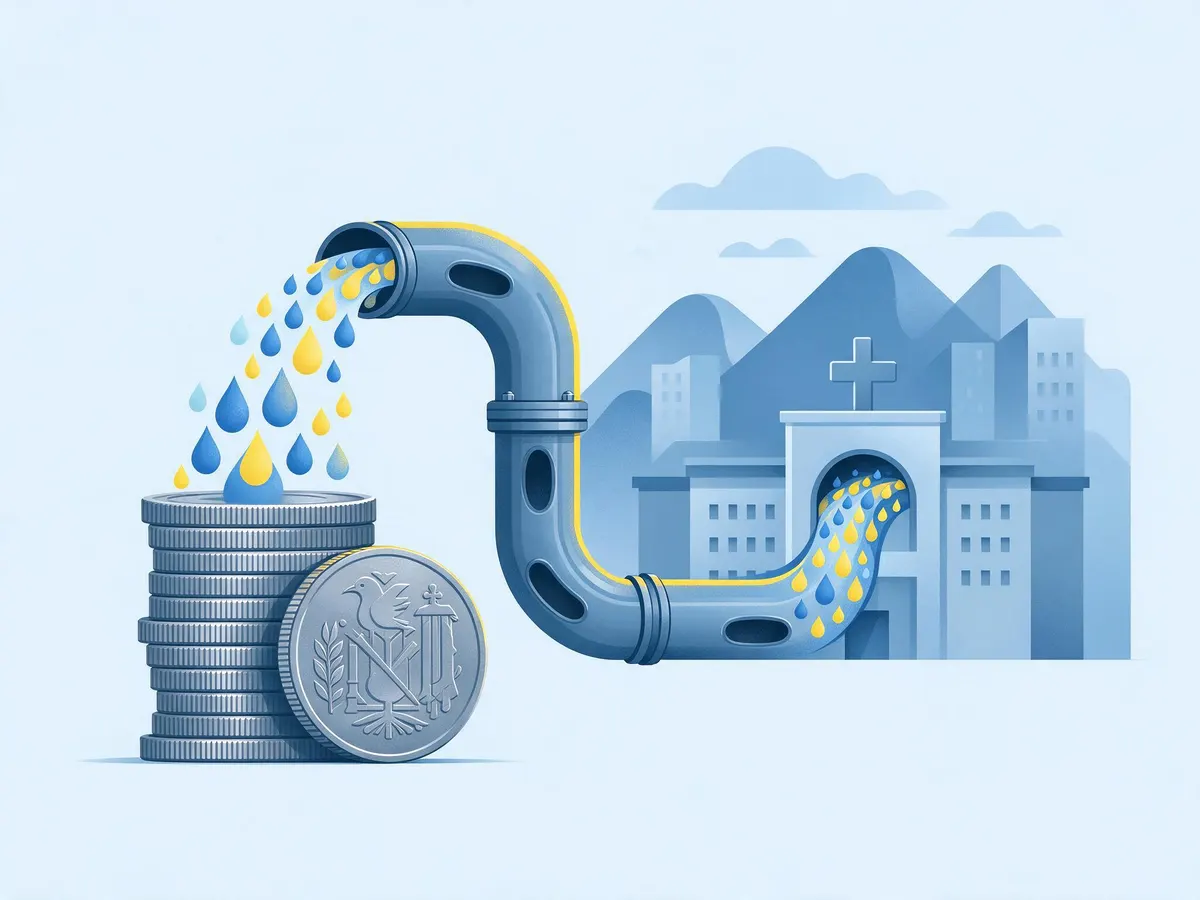
Colombia's gambling tax collections for health rose 39% through August 2026. How the earmarked model works, and what India's tax debate can learn.
Colombia’s gambling tax surge: 39% growth in health collections
Between January and August 2026, Colombia’s gambling regulator Coljuegos collected COP 977.220bn for the country’s subsidised health system, a 39.38% jump on the same eight months of 2025. In peso terms that is an extra COP 276.099bn against the COP 701.121bn booked a year earlier. Just under a trillion pesos, in eight months, from one revenue stream, with a single legally mandated destination: health.
That is the argument for looking at Colombia closely. Most countries tax gambling and drop the money into the general budget, where it disappears into everything else. Colombia does something narrower and more traceable, and the link between gambling tax and public health funding is written into statute rather than left to annual political bargaining. Whether you think that is good policy or bad policy, it is a real, measurable system producing published numbers, which is more than most of the arguments in India’s own tax debate currently have.
| Coljuegos health collections | Jan–Aug 2025 | Jan–Aug 2026 | Change |
|---|---|---|---|
| Total collected for the subsidised health system | COP 701.121bn | COP 977.220bn | +COP 276.099bn (+39.38%) |
| Online sports betting contribution | Not disclosed | COP 473.023bn | Segment up 84.24% |
| Sports betting share of total collections | — | ~48.4% | — |
Source: Coljuegos collection figures for January–August 2026.
How Colombia’s earmarked gambling tax system works
The short version: gambling in Colombia is a state monopoly whose proceeds are legally reserved for health. Private companies can operate games, but they do so under concession, and what they pay is not a normal corporate levy. It is the price of exploiting a public monopoly, and the law tells the state where that money has to go.
Tax collection process
Coljuegos is the national regulator for games of luck and chance. It licenses operators, supervises them, and collects what Colombian law calls exploitation rights (derechos de explotación) plus supervision fees. The base and rate differ by vertical: online gambling is assessed on gross gaming revenue, while retail products such as slot machines, bingo and lotteries use their own bases set in regulation. Online casino and online sports betting have been licensed nationally since Colombia opened the first regulated online market in Latin America, which is why those operators report and remit directly to Coljuegos rather than to a province.
Two features of this matter more than the rate itself. First, operators must integrate their systems with the regulator’s monitoring, so declared turnover is verifiable rather than self-reported in good faith. Second, licensing is the only legal route to the market, which gives enforcement against unlicensed sites a direct fiscal purpose: every blocked illegal operator is potential declared revenue.
Revenue distribution formula
Colombia’s framework for the gambling monopoly, Law 643 of 2001, earmarks the monopoly’s proceeds for health services. Coljuegos is a collector and transfer agent, not a spending ministry; it does not run hospitals or decide clinical priorities. Nationally operated games, including the online segment, flow through Coljuegos into the national health financing pool. Games administered at departmental and district level, notably lotteries and the traditional chance product, feed regional health budgets instead. The split by product is why a single headline number like COP 977.220bn represents Coljuegos’ national collections rather than every peso Colombian gambling generates for health.
Health ministry allocation
Once transferred, the money lands inside the general social security health system, administered through the national health resources administrator, and is used predominantly to finance the subsidised regime. That is the scheme covering Colombians who cannot pay contributions themselves, mostly lower income and informal sector households. In practice, gambling revenue is helping pay insurance premiums for people who would otherwise be uncovered, rather than funding a visible standalone programme with a plaque on it. Anyone needing the exact statutory percentages and current rates should take them from Coljuegos directly, since both have been amended repeatedly.
Why sports betting drove the increase
Coljuegos attributed the 39.38% rise primarily to sports betting, where collections grew 84.24%, helped by heavy activity around the football World Cup. Online sports betting alone produced COP 473.023bn in the eight months, roughly 48.4% of all collections in the period.
Run the arithmetic and the concentration is obvious. An 84.24% increase to COP 473.023bn implies a prior-year base of around COP 257bn, meaning the sports betting segment accounts for the large majority of the COP 276.099bn total increase. Everything else Coljuegos regulates, taken together, contributed the remainder.
Three things are happening at once here, and it is worth separating them:
- A calendar effect. A World Cup year inflates betting turnover. This is cyclical, not structural, and a 2027 comparison against a World Cup base will look very different.
- Market maturity. Colombia’s regulated online market has been running since 2017, long enough for licensed operators to have built real scale and for payment rails to be routine.
- Channelisation. Collections rise when play moves from unlicensed sites to licensed ones. Blocking offshore operators does not create new gamblers; it moves existing turnover into the taxable perimeter.
The honest read is that sports betting taxation gave Colombia a strong year, not a permanently higher plateau. Earmarking a volatile revenue stream to a recurring social expenditure is exactly the kind of fiscal mismatch finance ministries worry about.
What health-earmarked gambling funds actually pay for
In Colombia’s design, earmarked gambling funds are insurance financing, not project financing. The money goes into the pool that pays for subsidised coverage, which in turn pays for the benefits package: consultations, hospital treatment, medicines, maternal care, and the rest of the covered basket. Departmental lottery and chance revenue supports regional health budgets under the same statutory destination.
That produces a specific advantage and a specific limitation. The advantage is scale and stability of purpose. Nobody has to campaign each year for gambling money to reach health; the destination is the default. The limitation is fungibility, a problem every earmarking scheme shares. If gambling revenue rises by COP 276bn and the treasury quietly reduces another health transfer by a similar amount, total health spending has not moved at all, only its composition. Earmarking guarantees a destination, not additionality. Judging whether Colombia’s health system is genuinely better funded requires looking at total health expenditure, not the gambling line in isolation.
There is also a cost side that revenue figures never show. Higher regulated betting volumes mean more people gambling, and a share of them will develop problems. A model that routes gambling money to health is more defensible when some of that money funds treatment, prevention and research on gambling harm, and when the regulator pairs it with deposit limits, self-exclusion and advertising controls.
What India’s gambling tax and public health debate can take from Colombia
India’s fiscal approach is built differently. Online money gaming has been taxed at 28% GST on the full value of deposits since October 2023, winnings carry 30% TDS on net winnings under Section 194BA, and the Promotion and Regulation of Online Gaming Act, 2025 moved national policy towards prohibiting online money games while permitting e-sports and social games. Health is largely a state subject, and state lottery revenue flows into general state budgets rather than a statutory health fund. There is no Indian analogue to Law 643.
So Colombia is not a template. It is a set of testable propositions worth holding up against Indian arguments:
- Revenue follows enforcement, not rates alone. Colombia’s collections grew because licensed operators captured play and systems were monitored. A high headline rate on a small declared base raises less than a workable rate on a well-policed one.
- Earmarking buys political legitimacy, and invites dependence. Naming a destination makes gambling revenue easier to defend publicly, and harder to reduce later without a funding gap.
- Volatility is real. A World Cup can move collections by tens of percentage points. Recurring health commitments funded from such a base need a buffer.
- Transparency is the part that actually transfers. The reason this article can cite exact figures is that Coljuegos publishes them. Published, auditable collection data is a low cost reform available regardless of which direction a jurisdiction takes on licensing or prohibition.
None of this settles whether India should license, restrict or prohibit online betting. It does suggest that the question “what does gambling revenue fund, and can anyone verify it?” deserves a clearer answer than it usually gets.
Common questions
How does gambling tax fund public health?
Through earmarking. Legislation designates gambling levies for a named purpose, so the collecting regulator transfers the money to a health fund instead of the general treasury. In Colombia, proceeds of the gambling monopoly are reserved by law for the health system and mostly finance subsidised insurance coverage.
How much gambling tax goes to health in Colombia?
Coljuegos reported COP 977.220bn collected for the subsidised health system in January–August 2026, up 39.38% year on year. Statutory rates and allocation percentages vary by product and have been amended over time, so current figures should be taken from the regulator.
Why earmark gambling revenue at all?
Earmarking ties a politically contested revenue source to a popular public good, which makes regulated gambling easier to justify and the funding harder to divert. The trade-off is exposure to a volatile revenue base and the risk that earmarked money simply displaces existing budget allocations.
If gambling has stopped being entertainment for you or someone close to you, set deposit and loss limits, use self-exclusion tools, and seek professional support. Gambling always carries a built-in house edge and loses money over time.