



Why digital-first operators and suppliers still fund stands at iGaming exhibitions: the deal-making, demos, networking and ROI maths behind trade show budgets.
The biggest show in gambling needed a bigger building
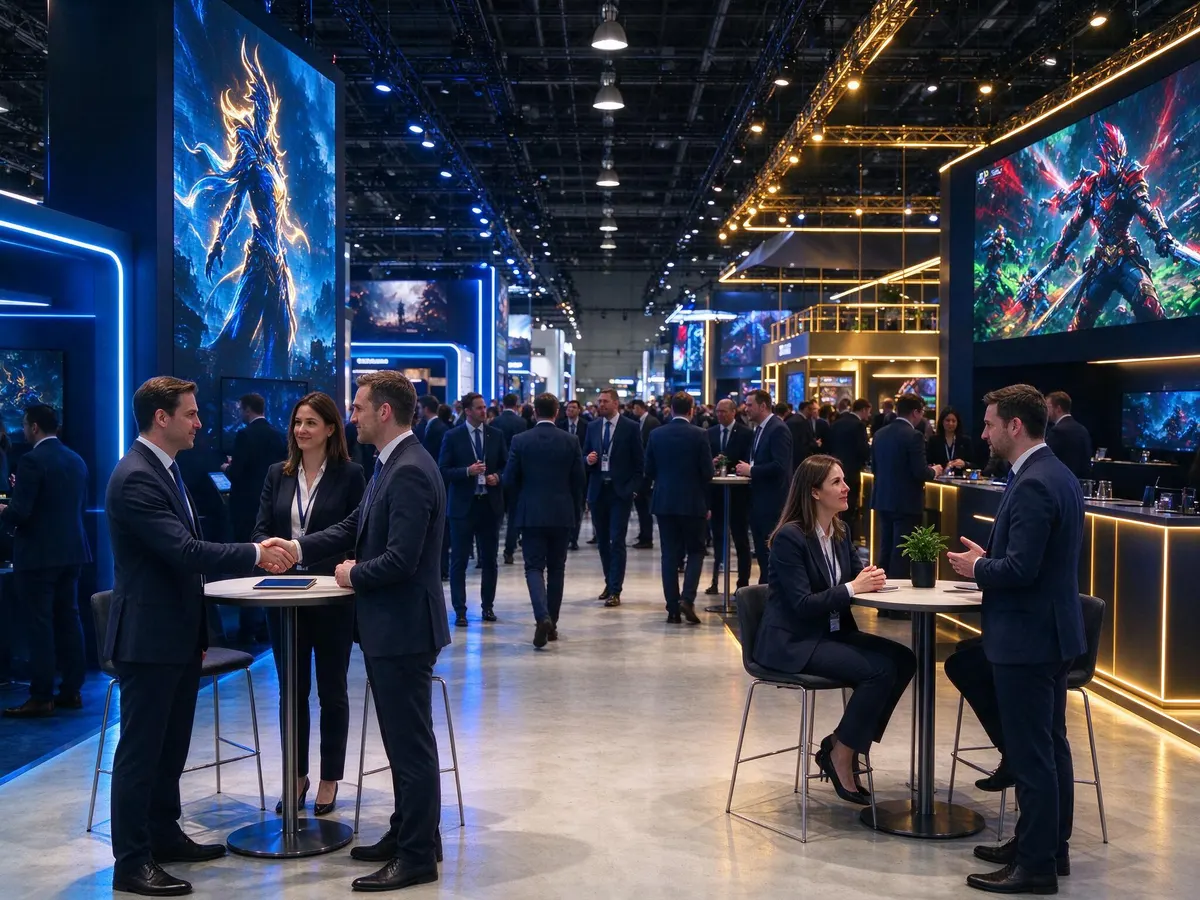
ICE spent more than a decade at London’s ExCeL and then moved to Fira de Barcelona in 2025 because it had run out of room. That is the quickest answer to why iGaming exhibitions still command real budget in an industry that can run almost every core function through a browser: the floor space keeps selling out. Operators, platform suppliers, payment providers and affiliates are not buying stands out of habit. They are buying three or four days of compressed, high-density access to the people who sign contracts, and no digital channel has replicated that density yet.
The business logic is unglamorous. A supplier’s sales cycle in this industry can run six to twelve months across legal, compliance, integration and commercial teams scattered over several jurisdictions. An exhibition collapses a chunk of that cycle into a week. You meet the CCO, the head of payments and the compliance lead in the same room, in sequence, with the product running on a screen behind you. That is the product being sold, and it is why the budget survives every cost-cutting review.
Why igaming exhibitions grew as the industry went remote
The paradox resolves once you look at what digitalisation actually did to the industry. It made the work remote and the market fragmented at the same time. A brand like 1xBet runs across dozens of markets with digital infrastructure handling day-to-day operations, yet it still books space at events such as SBC Summit in Lisbon. Video calls handle the operational layer perfectly well. They handle the judgement layer badly.
Three things push companies back into physical rooms:
- Regulatory fragmentation. Every newly regulated market brings its own licensing regime, tax structure, advertising rules and local payment rails. Understanding Brazil, or a new African licence, or a reorganised European regulator means talking to people who have already filed the paperwork. Those conversations happen at the bar, not in a webinar Q&A.
- Vendor saturation. There are now hundreds of aggregators, game studios and platform providers making near-identical claims on near-identical websites. Buyers use trade shows to shortcut the noise and see who is real.
- Distributed teams. When your own commercial, product and compliance people live in five countries, the exhibition is often the only time they are in one place. A surprising share of exhibition value is internal alignment.
Conference agendas reflect that shift. Compliance, payments, responsible gambling tooling and market-entry sessions now take up as much programme time as marketing, because those are the topics where getting it wrong is expensive.
Deal-making that still needs a handshake: operator networking and trust
High-value partnerships in this industry carry counterparty risk that a video call does not resolve. If you are an operator integrating a payment provider, you are handing over player funds flow. If you are a studio signing with an aggregator, you are trusting revenue reporting you cannot independently audit. If you are licensing a brand or a sportsbook feed, you are tying your product roadmap to someone else’s.
Operator networking at exhibitions does three things for those deals that email threads cannot:
- It compresses the decision chain. Instead of three separate calls with commercial, technical and legal contacts, you get them together for forty minutes and surface the objections at once. Deals stall on unspoken objections, and people voice objections more readily in person.
- It allows informal due diligence. Walk a stand and you learn how many people the company actually employs, whether the demo is live or a video loop, how the team handles an awkward technical question. That read is hard to get from a deck.
- It creates the relationship you draw on later. When a payment route breaks at 2am or a regulator issues a query, the person who answers quickly is usually the one you had dinner with. That is not sentimentality, it is operational resilience.
Experienced business development teams treat the show itself as the midpoint of the deal, not the start. Meetings are booked weeks ahead, the exhibition is where terms get agreed in principle, and contracts get signed in the following quarter. Attribution models that only count deals closed on the floor will always understate the return.
Product launches and live demos: why casino product reveals work better in a room
A new slot, crash game or live dealer table can be demoed over a screen share. The problem is that the things buyers actually care about do not travel well through a video codec. Latency, stream quality on a live dealer table, how the lobby feels on a mid-range Android handset, how fast the back office loads a report — all of that is better judged with the device in your hand.
Product launches at casino and sportsbook exhibitions earn their cost for a few practical reasons:
- Buyers test, not watch. Hand a head of casino a tablet and let them spin a high-volatility title or trigger a bonus round, and they form a view in two minutes that a recorded demo would not produce in twenty.
- Live studios are physical products. Live dealer suppliers often build a working studio set on the stand because you cannot otherwise convey camera work, dealer training and table presentation.
- Feedback arrives immediately. Product teams get dozens of unfiltered reactions from the exact buyer profile they are targeting, before the title hits a commercial roadmap. That shortens iteration cycles.
- Launch timing creates urgency. Announcing a platform release or a new market certification at a major show concentrates press coverage, analyst attention and partner enquiries in one window, rather than diffusing it across a quiet news week.
Networking beyond LinkedIn at gambling trade shows
LinkedIn is good at finding people and poor at warming them up. Cold outreach to a senior operator contact competes with the hundred other messages that arrived that week. At gambling trade shows, the hierarchy flattens for a few days: the same person who ignores InMail will talk for ten minutes while queuing for coffee.
The useful networking tends to be unstructured. Side events, affiliate meetups, sponsored dinners and after-parties generate conversations that would never be scheduled, and a lot of recruitment happens in those rooms too. Structured formats have their place as well: pre-booked meeting zones, matchmaking tools, speaker sessions that give you a legitimate reason to approach someone afterwards. The pattern most teams report is that planned meetings deliver the pipeline and chance encounters deliver the surprises, including market intelligence about who is losing a licence, who is being acquired and which supplier is quietly failing to pay.
The business case: how to measure trade show ROI honestly
Exhibition ROI is calculable, but only if you define the inputs before you travel. Total cost is more than the stand: space, build, shipping, staff travel and accommodation, hospitality, giveaways, side-event sponsorship, plus the opportunity cost of four or five senior people being off desk for a week. Against that, you track pipeline rather than revenue, because the revenue arrives later.
| Metric | How to calculate it | What it tells you |
|---|---|---|
| Cost per qualified meeting | Total exhibition cost ÷ number of meetings with a decision-maker in your target profile | Whether the show beats your normal cost of acquiring a sales conversation |
| Pipeline value generated | Sum of expected contract value of opportunities created or advanced at the show | The forward-looking return, before anything closes |
| Stage progression rate | Share of existing opportunities that moved a stage within 30 days of the event | The acceleration effect on deals already in motion |
| Closed-won attribution | Contracts signed within 6 to 12 months where an exhibition meeting is logged in the deal history | Actual revenue return, measured on a realistic lag |
| Retention value | Meetings held with existing partners and renewals discussed on site | The account-management return that lead counts miss |
| Brand and media output | Press coverage, interviews, speaking slots, inbound enquiries post-show | Softer value, worth logging rather than guessing at |
Run the arithmetic with your own figures. If a stand programme costs you a given amount and produces 50 qualified meetings, your cost per meeting is that total divided by 50 — compare it directly against what your outbound team spends to generate one qualified call. Most suppliers find the exhibition number looks expensive per meeting and cheap per closed deal, because the meeting quality is higher. The discipline that separates a good exhibition programme from an expensive one is boring: pre-booked diaries, a CRM campaign code applied to every contact, notes logged the same day, and a follow-up sequence that starts within 72 hours while recall is intact. Teams that skip the follow-up discipline are the ones who conclude trade shows do not work.
Which iGaming events justify the budget
The calendar has more events than any company can sensibly attend. Most organisations settle on one flagship global show, one regional show per target market, and a couple of niche events. A rough map of the main options:
| Event | Base and typical timing | Strongest for |
|---|---|---|
| ICE | Barcelona, January | The largest B2B gathering in gambling; broad supplier showcase covering online and land-based, strong for first meetings at scale |
| SBC Summit | Lisbon, autumn | Sports betting and affiliate focus, heavy operator attendance, strong conference programme |
| SiGMA (Malta plus regional editions) | Malta in November, with Eurasia, Asia, Africa and Americas editions | Market-entry intelligence and emerging-market partnerships; the regional editions are where new jurisdictions get mapped |
| G2E | Las Vegas, autumn | North American market, land-based technology and the US regulated online segment |
| Affiliate-focused events | Various, often co-located with larger shows | Traffic partnerships, media buying and affiliate deal negotiation |
Choose on audience overlap, not on floor size. A regional show with 300 relevant operators is worth more than a mega-event where your buyer persona makes up two percent of attendees. And before booking, decide which of the metrics above you are actually optimising for, because a stand built for brand visibility looks nothing like a stand built for closing deals.
Frequently asked questions
Why do iGaming companies attend exhibitions when the industry is fully digital?
Because the commercial layer of the industry is not digital. Partnership decisions involve trust, counterparty risk assessment and multi-stakeholder negotiation, all of which move faster in person. Exhibitions also concentrate market intelligence on regulation and payments that is hard to gather remotely.
Are gambling trade shows worth it for smaller suppliers?
They can be, but rarely with a large stand. Small suppliers often get better returns from attending as delegates with a packed meeting schedule, sponsoring a side event, or sharing space, then measuring cost per qualified meeting against their usual outbound cost.
How soon should follow-up happen after an event?
Within three days, with a specific reference to what was discussed. Generic follow-up emails sent a fortnight later are the single most common reason exhibition pipeline evaporates.
What should be in place before the show?
A target list, pre-booked meetings, a CRM campaign code, agreed qualification criteria and a named owner for every lead. Everything else is logistics.
One final note for anyone building an exhibition programme: responsible gambling, player protection and compliance tooling now sit at the centre of most conference agendas and most buyer conversations. Suppliers who can speak credibly about safer gambling controls, licensing requirements and player-funds handling tend to have shorter sales cycles than those who cannot.