




How gambling operator charity foundations like Betsson's new initiative connect to real responsible gambling outcomes, and how to tell impact from marketing.
Twenty-two children and €112 million: the gap in operator giving
One of the first projects highlighted by the new Betsson Foundation is Boosting Up, a five-year programme in Peru working with 22 children from a school in Lima, combining football, English lessons and nutritional support. In the same company’s second-quarter results, Latin America revenue came in at €112 million, up 32% year on year, making it Betsson’s largest market.
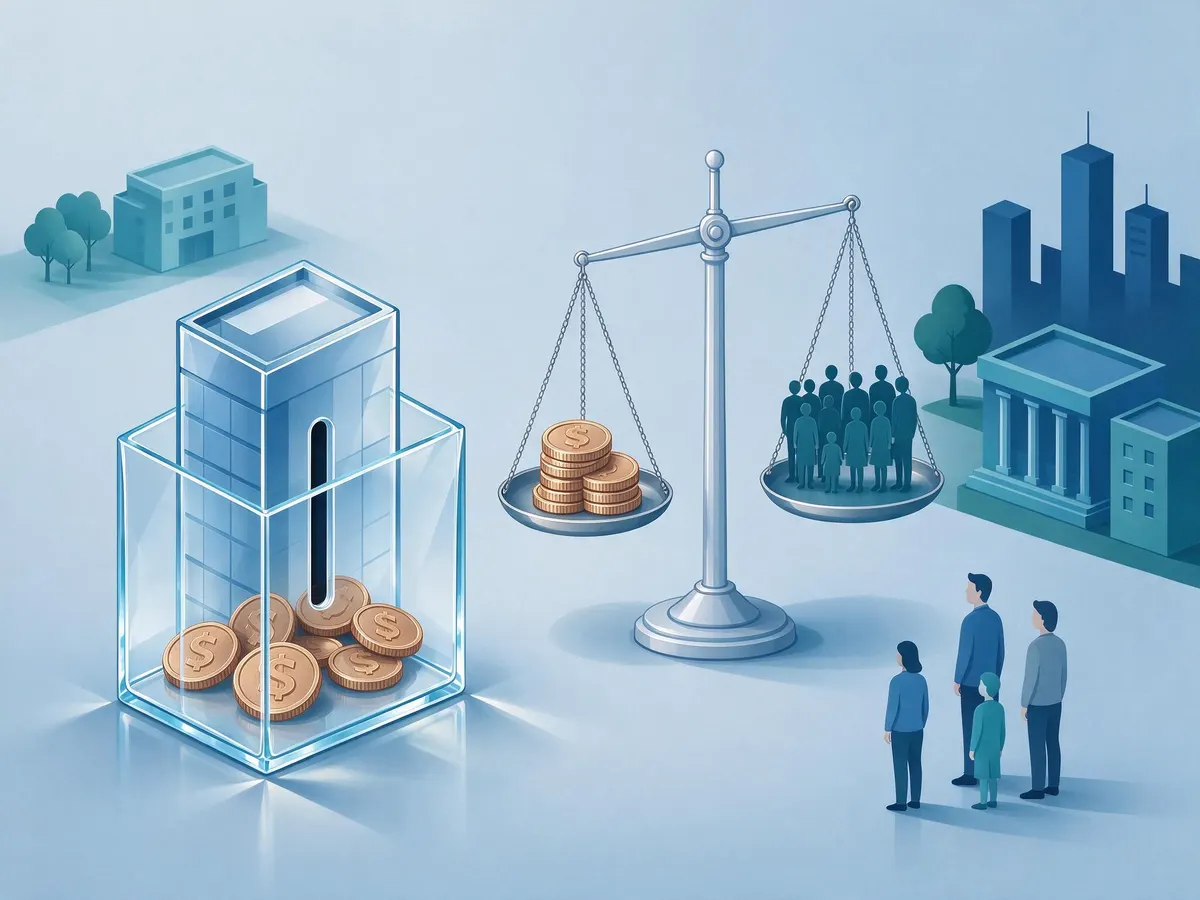
Hold those two numbers next to each other and you have the central problem with any gambling operator charity foundation. Not that the work is fake, 22 children getting five years of structured support is real and worth having, but that the scale of the giving and the scale of the revenue are rarely in the same conversation. And almost none of the giving, in most operator foundations, goes anywhere near the people harmed by the product itself.
That is the thing worth examining. Not whether operators should give money away, but whether a foundation is a responsible gambling instrument or a community relations one, and how you tell the difference from the outside.
What a gambling operator charity foundation actually is
A gambling operator charity foundation is a separate legal entity, funded by a betting or casino company, that distributes money to causes under its own governance structure. The separation matters: a foundation has its own board, its own charter and, in principle, its own decision-making process, which is what distinguishes it from a marketing department writing cheques.
Compare the three things operators commonly lump together under corporate social responsibility:
- Sponsorship. A commercial contract. The club gets money, the operator gets brand exposure. Useful to both parties, but it is advertising spend, not philanthropy.
- CSR campaigns. Run inside the company, usually project by project, often timed to launches or market entries, with budgets that move when marketing priorities move.
- A foundation. A standing entity with an endowment or a committed annual contribution, a defined mission, and trustees who can in theory say no to the parent company.
Funding models vary. Some foundations are endowed once and spend investment income. Most operator foundations are funded by annual transfers from group profit, which means the giving tracks the business cycle. A third model, increasingly pushed by regulators, is a percentage of gross gaming revenue, which is harder to quietly reduce in a bad year.
Why do betting companies create foundations at all? Three honest reasons, usually at once. They centralise scattered community projects so the money does more. They give the group an ESG story that institutional investors and licensing authorities want to see. And they build goodwill in markets where gambling advertising is politically fragile. Those motives are not disqualifying. They just mean you should read the governance documents rather than the press release.
Inside the Betsson Foundation launch
Betsson Group set up the Betsson Foundation in Malta as a separate legal entity from the Stockholm-listed parent, with a governance framework that includes the founding company, a Board of Administrators and a Supervisory Council. The stated purpose is to pull together the group’s existing charitable, community and sports projects and strengthen their long-term impact, while developing new projects in markets where Betsson operates.
Sport stays central. The company says it will use its football club and athlete partnerships to extend the reach of community projects, which is a candid admission that the foundation and the sponsorship portfolio are designed to work together. Betsson Operations CEO Jesper Svensson described sport and community engagement as “long been part of Betsson’s DNA,” while ESG director Jonna Danlund framed the foundation around “fostering long-term partnerships” rather than one-off donations.
Two things are genuinely noteworthy here. First, the separate legal incorporation with a supervisory council above the administering board, which is a real structural choice and more than many operators bother with. Second, the explicit shift from scattered one-off grants to multi-year programmes, which is the single biggest predictor of whether community money achieves anything measurable. Boosting Up running five years instead of five months is the point of the exercise.
What the launch does not include is the part responsible gambling specialists will look for first. The announced focus is sport, community and youth development, in markets like Peru where Betsson took the naming rights to the top-tier football league in 2021, branding it Liga 1 Betsson, and later extended that partnership for a further four years, and where it also backs the Peruvian Volleyball Federation. There is no published annual budget figure, no disclosed grant-making policy for problem gambling support, and no stated allocation to treatment or research. That is not an accusation, foundations often broaden their remit after year one, but on the material available this is a community investment vehicle sitting alongside the company’s responsible gambling programme rather than inside it.
It is also worth noting what happens when the rules around a market change. Betsson ran major campaigns in Chile before the country’s Ministry of Justice in 2023 ordered an end to gambling-related sports sponsorships, which led the Chilean Football Association (ANFP) to terminate its Betsson sponsorship deal in October 2023. Community commitments tied to commercial presence tend to follow the commercial presence. A foundation with its own endowment is insulated from that; one funded by annual group transfers is not.
Where foundations can actually reduce gambling harm
If a foundation wants to be a responsible gambling tool rather than a reputation tool, there are three places the money does measurable work.
Paying for treatment that nobody else funds
Gambling addiction treatment is chronically under-resourced in most jurisdictions. Public health systems rarely have dedicated gambling services, so the gap is filled by charities running helplines, counselling, residential programmes and family support. These are the least glamorous grants available, there is no photo opportunity in a 24-hour helpline rota, and they are the clearest signal that a foundation is pointed at harm reduction. The structural requirement is independence: clinical services cannot be seen to be steered by the companies whose customers they treat, which is why the strongest arrangements route money through an intermediary body with no operator representation on grant decisions.
Research, data and independent evaluation
Harm reduction only improves if someone measures it. Foundation money can fund prevalence studies, longitudinal research into how products and bonus structures affect play, and evaluation of whether deposit limits, loss limits and self-exclusion tools actually change behaviour. The test is whether the funder can influence the findings. Research with pre-agreed publication rights, independent peer review and no operator veto is worth something. Research the sponsor can shelve is not.
Education that tells the truth about the maths
Community education is where foundations most often slide into marketing, because “play responsibly” messaging doubles as brand presence. Education that earns its funding explains the mechanics honestly: that every casino game carries a house edge, that a slot advertising 96% RTP returns roughly 96% of total wagers across millions of spins and not across your session, that each spin is independent because outcomes come from an RNG, and that no staking pattern changes the underlying negative expected value. Teaching people how volatility produces long losing runs does more good than a logo on a billboard telling them to stay in control.
How to judge a foundation’s impact rather than its press release
You can assess an operator foundation without insider access. Five checks cover most of it.
| What to check | Signal of real impact | Warning sign |
|---|---|---|
| Legal structure | Separate entity, published charter, trustees who are not group executives | Programme run from the marketing or brand budget |
| Funding | Committed percentage of revenue or an endowment, disclosed annually | Discretionary transfers with no published figure |
| Grant decisions | Independent panel; operator cannot direct individual grants | Commercial partners and sponsored properties receive the bulk of funds |
| Outcomes | Named beneficiaries, counts served, third-party evaluation, multi-year reporting | Headline inputs only, such as total donated or number of initiatives |
| Harm relevance | Defined allocation to treatment, research or player protection | Zero connection between the giving and the product’s risks |
One more practical test: read the group’s annual report alongside the foundation’s. If foundation spending is a rounding error next to marketing and sponsorship spend, the foundation is a smaller part of the company’s social footprint than its advertising is. That does not make it worthless. It does tell you how to weight it.
Foundations, levies and the new sustainability expectations
Foundations have become standard equipment in iGaming sustainability reporting because the audience for that reporting has changed. Listed operators answer to institutional investors with ESG screens, and licensing authorities in regulated markets increasingly want evidence of social contribution alongside anti money laundering and player protection compliance. A multi-year foundation programme is easier to put in front of both than a list of last year’s donations.
The direction of travel, though, is away from voluntary giving. Britain moved from relying on industry donations to a statutory levy collected from licensed operators and distributed for prevention, research and treatment through public bodies, precisely because voluntary contributions were uneven and the independence of operator-funded research was questioned. Expect more jurisdictions to take that route. In that world a charity foundation is not a substitute for harm reduction funding, it is a separate thing an operator does with its community presence, and it should be judged as community investment, not as evidence of player protection.
For regulators and industry professionals, the useful question is whether a foundation adds capacity the levy does not reach: local services, prevention work in emerging markets with no funding mechanism at all, longitudinal research nobody else will pay for. Betsson’s structure, a separate Maltese entity with a supervisory council and a stated preference for long-term partnerships, is a reasonable vehicle for that if the grant-making policy ever points there.
If you are a player rather than a professional, treat none of this as a safety feature. A foundation does not change the house edge, the wagering requirement on your bonus, or how much you can afford to lose. The tools that protect you are the ones inside your account: deposit and loss limits, session reminders, cool-off periods and self-exclusion. Use them, and if gambling has stopped being entertainment, contact a problem gambling support service in your jurisdiction. Our guides to responsible gambling tools, operator licensing and compliance and problem gambling support resources go into the detail.