




Pennsylvania casinos cut 598 jobs while rivals hire. What casino industry jobs data reveals about revenue pressure, automation and where gaming is heading.
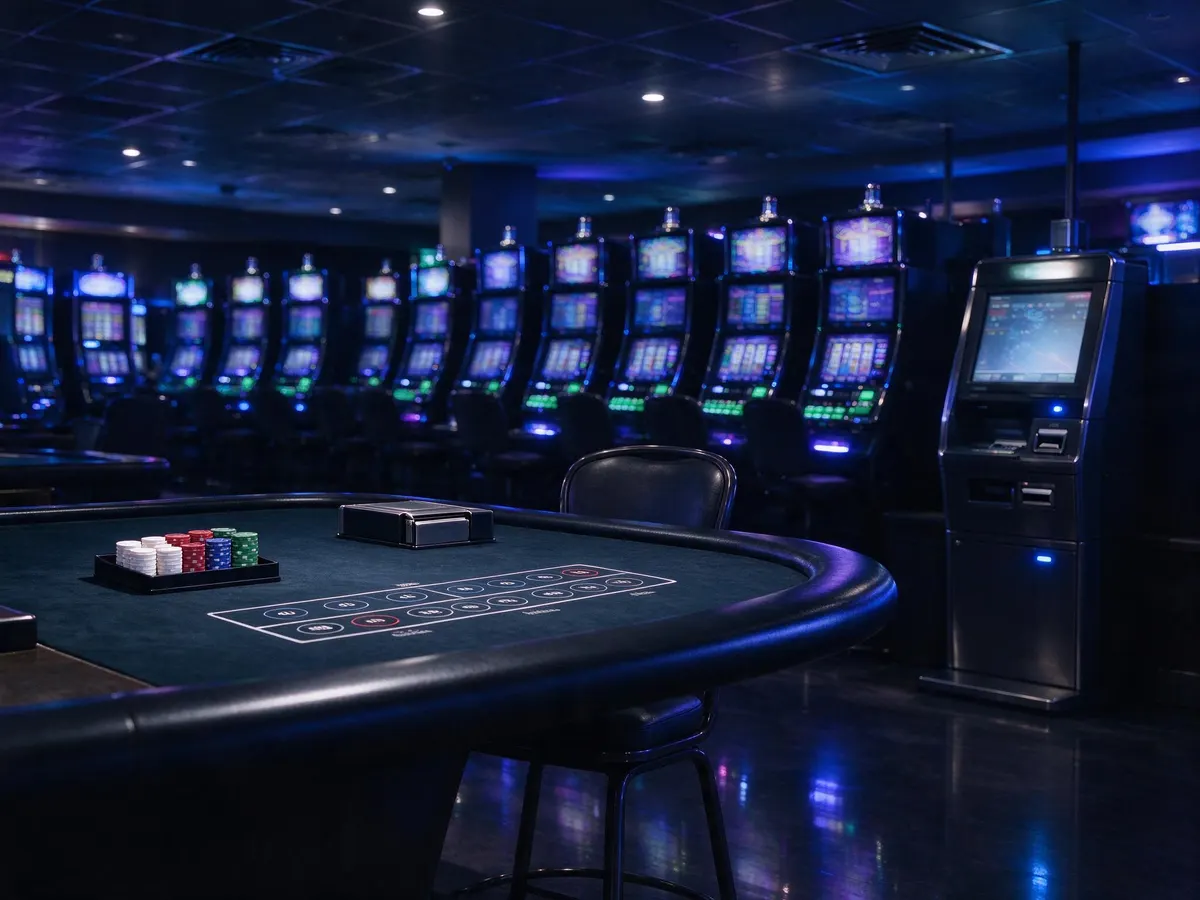
Walk a Pennsylvania casino floor at 11pm on a Tuesday and you can count the closed tables. Felt squared off, chips racked, a single pit boss covering what used to be two. The dealers who worked those tables didn’t quit the industry in a dramatic exodus. Their shifts just stopped being scheduled.
That small, quiet picture is the clearest way to read what is happening to casino industry jobs right now: the headcount is being reallocated, not simply erased. Pennsylvania’s 18 land-based casinos employed 15,252 people as of June 30, 2026, a drop of 598 positions or 3.8% in a single fiscal year, according to the Pennsylvania Gaming Control Board’s 2025-2026 annual report. Table game staff absorbed 243 of those cuts. And yet, in the same state, in the same month, Rivers Casino Philadelphia was running a job fair with on-the-spot offers.
The Pennsylvania numbers, and what makes them unusual
The detail that makes this case study worth studying is the one most summaries skip: Pennsylvania lost those jobs while gaining a casino. Happy Valley Casino opened in State College in April 2026, bringing the state to 18 land-based properties. A new building, a new payroll, and the statewide total still fell.
| Pennsylvania land-based casino employment | Figure |
|---|---|
| Licensed land-based casinos | 18 |
| Total employees (June 30, 2026) | 15,252 |
| Year-over-year change | −598 positions (−3.8%) |
| Table game positions cut | 243 |
| New property added in the period | Happy Valley Casino, State College (April 2026) |
Source: Pennsylvania Gaming Control Board, 2025-2026 Annual Report.
Why one state is a decent bellwether
Pennsylvania is a mature, crowded, fully hybrid market. It has retail casinos, regulated iGaming, sports betting and licensed live dealer studios operating inside its borders. Whatever structural pressures are working on regional land-based gaming in the United States, they are working on Pennsylvania first and hardest.
That said, be careful about turning one state’s annual report into a national headline. Nevada and the Las Vegas Strip run on a different economic engine (convention traffic, international visitation, high-end hospitality), tribal markets report on their own terms, and newer states are still in a build-out phase where hiring naturally outruns attrition. If you need a national read, the honest route is to pair state regulator reports like the PGCB’s with federal labor data for gambling industries rather than extrapolating from a single commonwealth.
What the Pennsylvania data does show cleanly is the shape of the change. Dealers down. Food, beverage and hospitality roles being actively recruited. Live dealer studio operators advertising for interactive table game staff. The pit shrinks, the kitchen and the studio grow.
What is actually driving casino workforce cuts
Flat-to-falling revenue meeting rising labor cost
Look at a single property to see the squeeze. Rivers Casino Philadelphia generated $212.3 million in gross gaming revenue during the 2025-26 fiscal year from 1,500 slot machines and 100 table games, down 3.3% from $219.5 million the prior year. A low single-digit revenue decline is not a crisis. But match it against several years of wage, benefit and food-cost inflation and the margin math changes fast.
Dealers are the most schedule-sensitive labor on the property. A table only earns when it is open, and an open table with two players on a slow midweek shift can lose money on labor alone. So operators under margin pressure do the obvious thing: they open fewer tables for fewer hours. Nobody announces a layoff; the roster just thins through attrition and reduced scheduling.
Market saturation and the same player, split more ways
Pennsylvania’s regional casinos largely compete for the same drive-in customer. Add a property and you have not necessarily added a player; you have divided existing demand across more floors, more slots and more payroll. Consolidation pressure follows naturally. When per-property revenue plateaus in a saturated market, cost discipline becomes the only lever management fully controls.
Efficiency programs that sound boring and matter enormously
The operational playbook is unglamorous and effective: demand-based table scheduling, cross-trained staff who can move between pit and cage functions, flatter supervisory layers, outsourced or seasonal food service, and fewer dedicated attendants per bank of slot machines. Each change shaves a fraction of a percent off labor cost as a share of revenue. Stack enough of them and you get a 3.8% headcount decline with no dramatic announcement attached.
How automation is reshaping gaming industry employment
The floor itself needs fewer hands
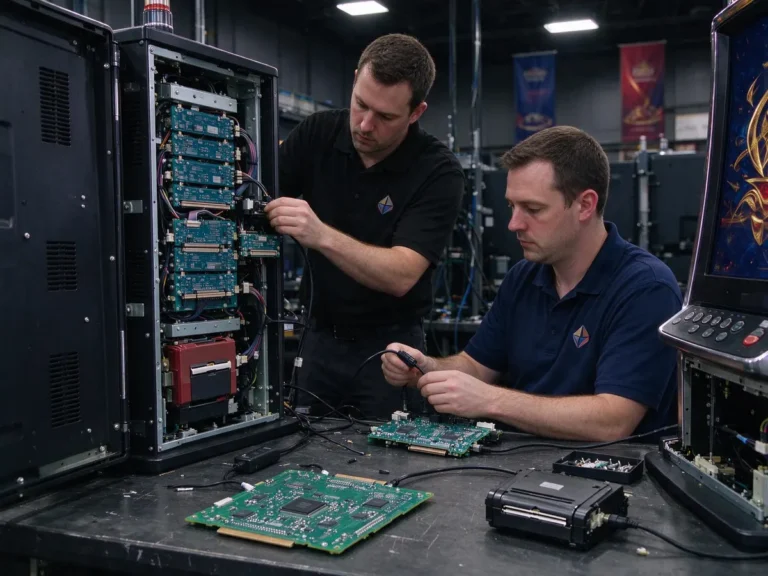
Ticket-in/ticket-out and cashless wagering removed most of the coin-handling and hopper-filling work that once defined slot operations. Self-service kiosks handle redemptions that used to require a cage cashier. Electronic table games and stadium-style terminals let one supervisor cover dozens of betting positions that would otherwise need live dealers rotating in 30-minute pushes. Mobile ordering trims front-of-house labor in casual dining.
None of this is new technology. What is new is how completely it has been adopted, and the fact that operators now treat automated capacity as the default for low-demand hours and live dealers as the premium layer reserved for peak traffic and higher limits.
Digital transformation moves the job rather than deleting it
Here is the part the Pennsylvania figures hint at. While 243 table game positions disappeared from casino floors, Evolution and Playtech, two of the largest suppliers of remote live dealer content to iGaming platforms, were recruiting interactive table game staff for their Pennsylvania studios. The craft of dealing blackjack has not vanished. It has partly relocated from a pit with pit bosses to a studio with cameras, where one dealer can serve thousands of players at once.
That ratio is the whole story of digital gaming economics. Online revenue scales with servers and marketing spend, not with headcount. An iGaming operation adds compliance analysts, data and CRM specialists, payments staff and studio talent, but it does not add a dealer for every table or a server for every lounge. So as revenue shifts channels, total industry headcount per dollar of gross gaming revenue falls, even where the dollars themselves are growing.
Where casino staffing is still expanding
Hospitality, not the gaming floor
Rivers Casino Philadelphia’s October job fair was explicit about this. The open roles were sous chefs, cooks, food runners, bartenders, waitstaff, greeters and managers, tied to new restaurants and the property’s push to be a destination for food, hospitality and lodging rather than gambling alone. Applicants had to be at least 18, with health insurance, paid time off, tuition reimbursement and 401(k) benefits attached, and no prior experience required.
The same property’s longer-term bet points the same direction: the 62-suite Riversuites Hotel at The Battery Philadelphia, announced in late 2023, converting a former Delaware River power plant into a mixed-use complex within walking distance of the casino. Rooms and restaurants need people in a way that slot banks no longer do.
New markets and ordinary churn
A brand new casino hires from scratch, which is why Happy Valley’s opening sits so oddly against the statewide decline. And table game work has not stopped being advertised: active dealer listings have appeared across the commonwealth at properties including Harrah’s Philadelphia, Mohegan Pennsylvania, Parx Casino Shippensburg, Hollywood Casino Morgantown, Live! Casino & Hotel Philadelphia, The Casino at Nemacolin and Happy Valley. Dealer turnover is high by nature, so recruitment continues even in a shrinking category. Net decline plus heavy churn is a reallocation signal, not a shutdown signal.
Premium service as a deliberate labor strategy
Where operators are adding people, they are adding them close to the highest-spending customers: hosts, high-limit pit staff, VIP services, upgraded dining. The logic is straightforward. Automation absorbs the low-margin, high-volume end of the business, and human service gets concentrated where it measurably lifts spend per visit and return frequency.
Reading industry health off the payroll
A 3.8% headcount decline in a market that added a property is not proof of a sick industry. It is proof of a restructuring one. Three forces are doing most of the work.
- Channel competition. Regulated online casino and sportsbook products compete directly with regional retail floors for discretionary spend, and they serve that demand with a fraction of the labor per dollar.
- Consumer behaviour. Visits are shorter and more experience-led. Players who come for a meal, a show and 40 minutes of blackjack support kitchen jobs more than they support a 24-hour pit.
- Cost structure. In saturated markets with high gaming tax rates, labor is one of the few variable costs management can tune quarter to quarter.
For anyone tracking the sector, the useful metrics are not total headcount alone. Watch dealers per table and open-table hours, non-gaming revenue as a share of property revenue, live dealer studio headcount in iGaming states, and whether hiring announcements attach to restaurants and hotels or to the gaming floor. Pennsylvania’s answer for 2025-26 was clear: hotels and restaurants, yes; pits, no.
One footnote worth keeping in view. As more of the business moves to digital channels, responsible gambling moves with it, from pit-level observation to deposit limits, cool-off tools and automated monitoring. That shift creates compliance and player-protection roles even as it removes floor roles, and it changes what a well-staffed operator looks like.
Frequently asked questions
Why are casinos cutting jobs?
Mostly margin arithmetic. Property-level gaming revenue in mature regional markets is flat or slightly down, as at Rivers Casino Philadelphia, while wages and food costs keep rising. Operators respond by opening fewer tables during slow hours, flattening supervision and letting attrition do the rest. Automated payouts, cashless play and electronic table games make that possible without closing the floor.
What do casino workforce changes mean for the industry?
They signal a shift in where value is created rather than a collapse in demand. Land-based properties are moving labor from the gaming floor into hospitality, while gaming revenue migrates toward digital channels that need far fewer staff per dollar earned. Expect leaner pits, bigger food and beverage teams, and growing technology, compliance and live studio payrolls.
How is automation affecting casino jobs?
Unevenly. Cashiering, coin handling and routine slot attendance have largely been automated. Dealing has been partly relocated rather than removed, with remote live dealer studios run by suppliers such as Evolution and Playtech hiring in the same state where 243 land-based table game positions disappeared. Roles that depend on in-person judgment and service, from hosts to chefs to surveillance and compliance staff, remain the hardest to automate.